 Skip to content

Signs, Risks, and What to Do
Parvovirus, often called “parvo,” is one of the most serious illnesses that can affect young puppies. It spreads quickly, attacks aggressively, and requires immediate veterinary care. While it’s something every breeder and veterinarian is aware of, many new puppy owners don’t fully understand how it spreads or what to watch for. Here’s what you should know.
What Is Parvovirus?
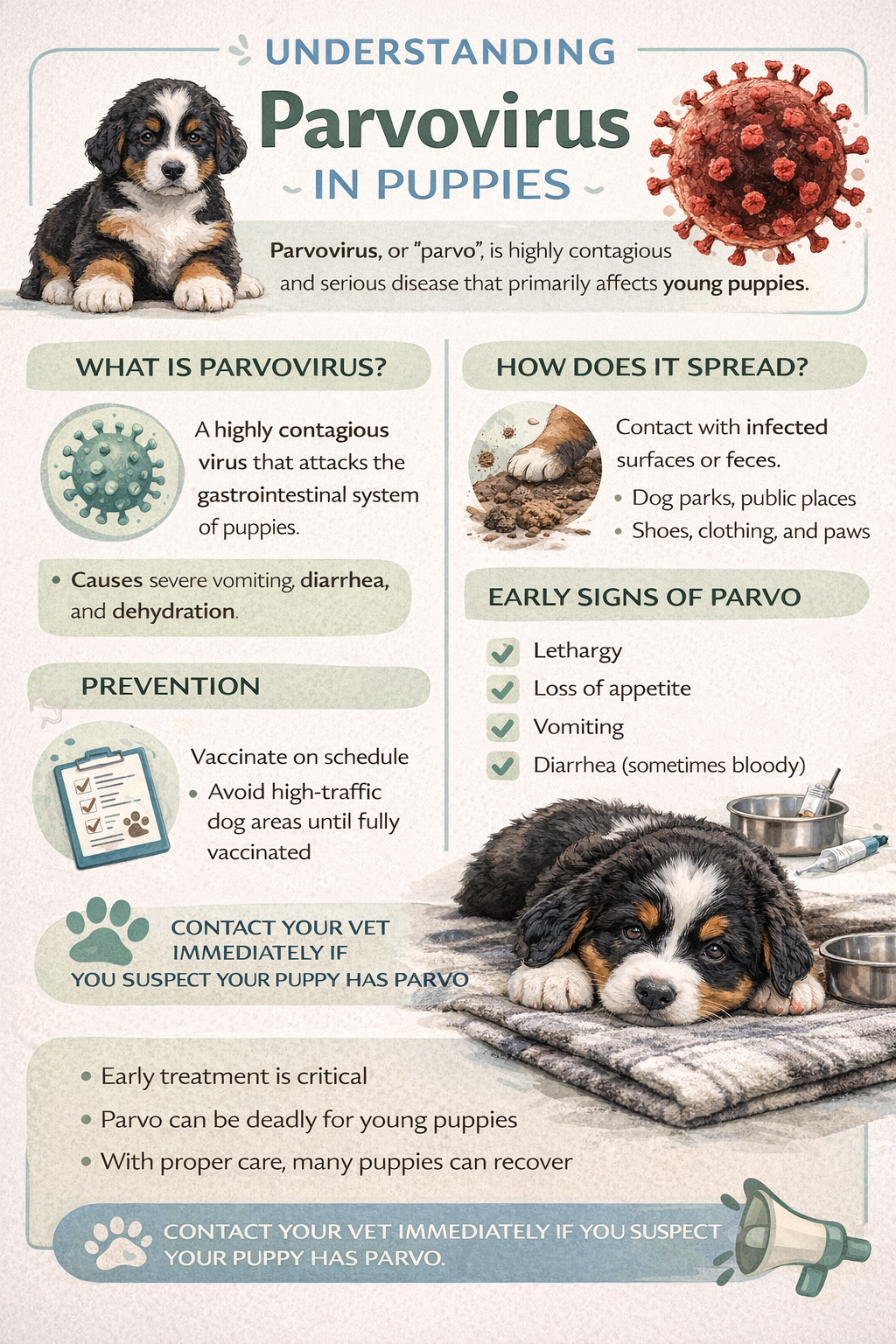
Canine parvovirus is a highly contagious virus that primarily affects a puppy’s gastrointestinal system. It attacks rapidly dividing cells in the body, especially in the intestines, which can lead to severe dehydration and complications if not treated quickly. Puppies are especially vulnerable because their immune systems are still developing.
How Parvovirus Spreads
Parvo spreads through contact with contaminated surfaces, feces, or environments where infected dogs have been. It can live in soil and on surfaces for months under the right conditions. Common sources of exposure include:
- Public dog parks
- Pet store floors
- Shared water bowls
- Shoes or clothing that have come into contact with contaminated areas
- Contact with unvaccinated dogs
Because it’s so resilient, simple exposure in the wrong setting can be enough.
Early Signs to Watch For
Symptoms can appear quickly and worsen fast. Early detection matters, so you can watch for:
- Lethargy
- Loss of appetite
- Vomiting
- Severe diarrhea, sometimes bloody
- Fever
- Rapid dehydration
If you notice these symptoms in a young puppy, contact your veterinarian immediately. Parvo is not something to “wait out.”
Why Young Puppies Are Most At Risk
Puppies typically receive a series of vaccinations between 6 and 16 weeks of age. Until that vaccination series is complete, they do not have full protection. That window of vulnerability is why many breeders and veterinarians recommend limiting exposure to high-traffic dog areas early on. It’s not about being overly cautious. It’s about protecting developing immune systems.
Vaccination and Prevention
The parvo vaccine is highly effective when administered properly and on schedule. Your veterinarian will guide you through:
- Initial vaccination timing
- Booster schedule
- When your puppy is considered fully protected
Following that schedule closely is critical. In addition, simple precautions help reduce risk:
- Avoid dog parks until vaccines are complete
- Limit exposure to unknown dogs
- Keep early potty areas clean and controlled
Be mindful of high-traffic pet environments
When Is It Safe to Take Your Puppy Out?
Many new owners are eager to socialize their puppy right away, which is important. But safe socialization should happen thoughtfully. Controlled environments with known, vaccinated dogs are safer than public dog parks during the early weeks.
Your veterinarian can help you determine the safest timeline based on your puppy’s vaccine progress.
What To Do If You Suspect Parvo
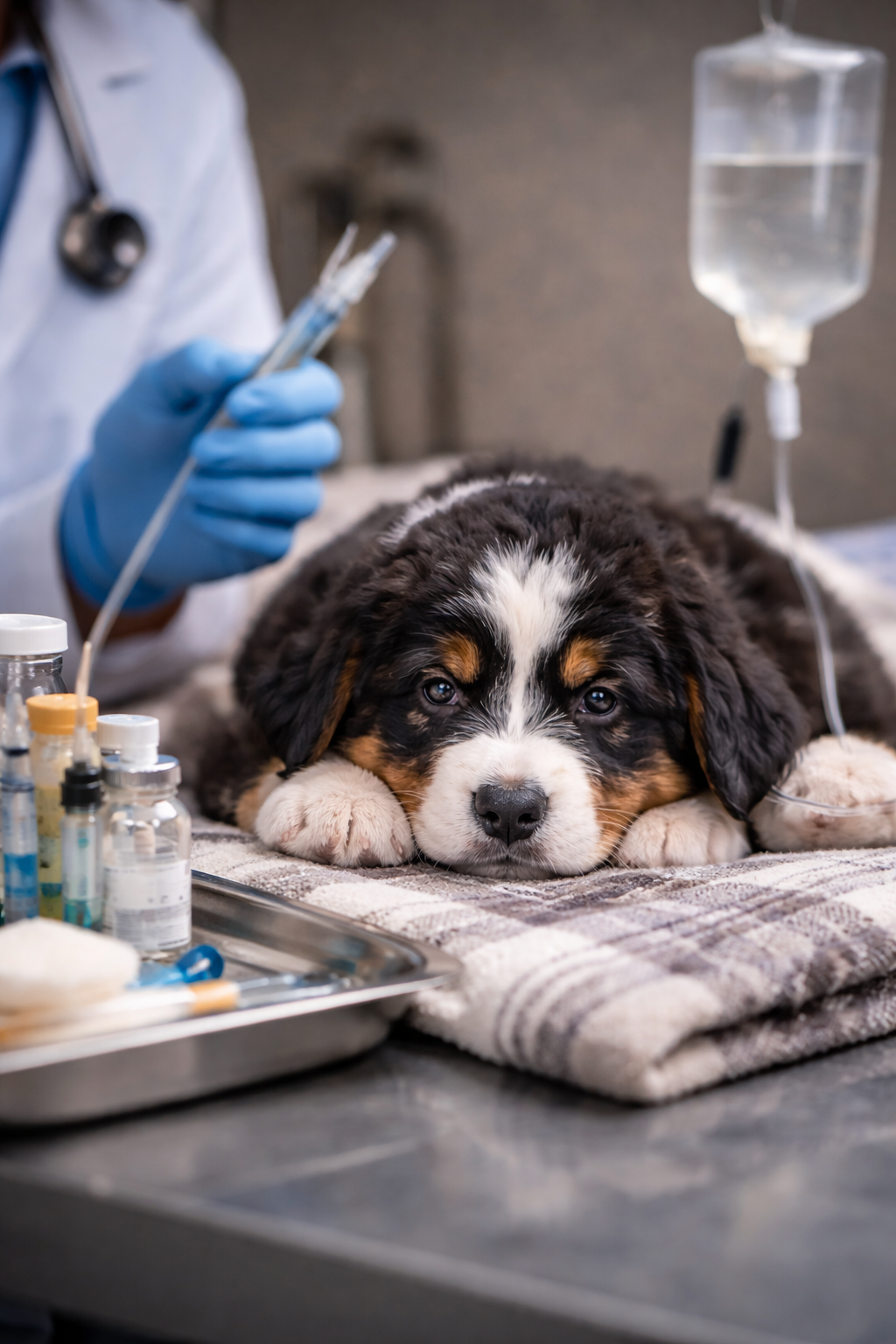
Time matters. If your puppy shows symptoms, contact your veterinarian immediately. Early medical intervention significantly improves survival rates. Do not attempt home remedies or delay treatment.
Final Thoughts
Parvovirus is serious, but awareness and prevention make a significant difference. Understanding the risks, following proper vaccination schedules, and taking sensible precautions during the early weeks can dramatically reduce the likelihood of exposure. Bringing home a puppy is exciting. Taking the right steps to protect their health ensures that excitement turns into a long, healthy life together.